 Listicle
Best SEL Programs for Elementary Students, Reviewed
Last Updated: November 4, 2026
Quick Summary
The best SEL programs for elementary students depend on how much change your school can absorb: Second Step offers a vetted core curriculum, Harmony SEL is free and relationship-focused, and Zones of Regulation is a framework rather than a curriculum. Choose the SEL programs your teachers can still deliver consistently in week nine.
- We scored programs on usability without prep, skill transfer, support for diverse learners, and honesty about limits.
- Second Step's main drawback is its heavy teacher training load, which can leave it unused.
- Emotional ABCs is the easiest single-teacher entry point but needs reliable device access.
- Positive Action is a multi-year culture project with many moving parts, not a hand-off curriculum.
- Effective programs change what students do when frustrated, with daily practice and shared family language.
Table of Contents
- Quick Comparison: Best SEL Programs for Elementary Students
- How We Evaluated These SEL Programs
- Second Step: The Research-Heavy Foundation
- Emotional ABCs: Digital Emotional Literacy for Young Learners
- Positive Action: A Whole-School Culture Shift
- Harmony SEL: Relationship-Building Without the Licensing Fee
- Zones of Regulation: A Practical Framework for Self-Regulation
- What Makes an SEL Program Effective for Elementary Students
- Frequently Asked Questions
Quick Comparison: Best SEL Programs for Elementary Students
The best SEL programs for elementary students differ less in what they teach than in how deeply they ask a school to change. Some are lesson packets you can run tomorrow. Others reshape schedules, discipline, and family communication. We read these programs the way a teacher would: what actually gets used on a hard Tuesday.
Below, we compare five commonly cited programs, then explain how to judge fit. If you are weighing a whole school rather than a curriculum, you can explore admissions to see how we build this work into a day.
| Program | Format | Cost Model | Best For | Main Trade-off |
|---|---|---|---|---|
| Second Step | Classroom lessons, K-5 | Paid subscription | Schools wanting a vetted core curriculum | Heavy teacher training load |
| Emotional ABCs | Digital modules | Free tier available | Teachers testing digital tools | Needs reliable device access |
| Positive Action | PreK-12, whole school | Paid licensing | Culture-wide implementation | Long rollout, many moving parts |
| Harmony SEL | Free lessons, CASEL-aligned | No cost | Relationship-focused classrooms | Limited customization |
| Zones of Regulation | Framework, not curriculum | Per product or training | Self-regulation support | Needs consistent adult use |
How We Evaluated These SEL Programs
We scored each program on four things: whether the lessons are usable without weeks of prep, whether the skills transfer outside the lesson, how well it serves diverse learners, and how honest the program is about what it does not do. We did not rank by brand size.
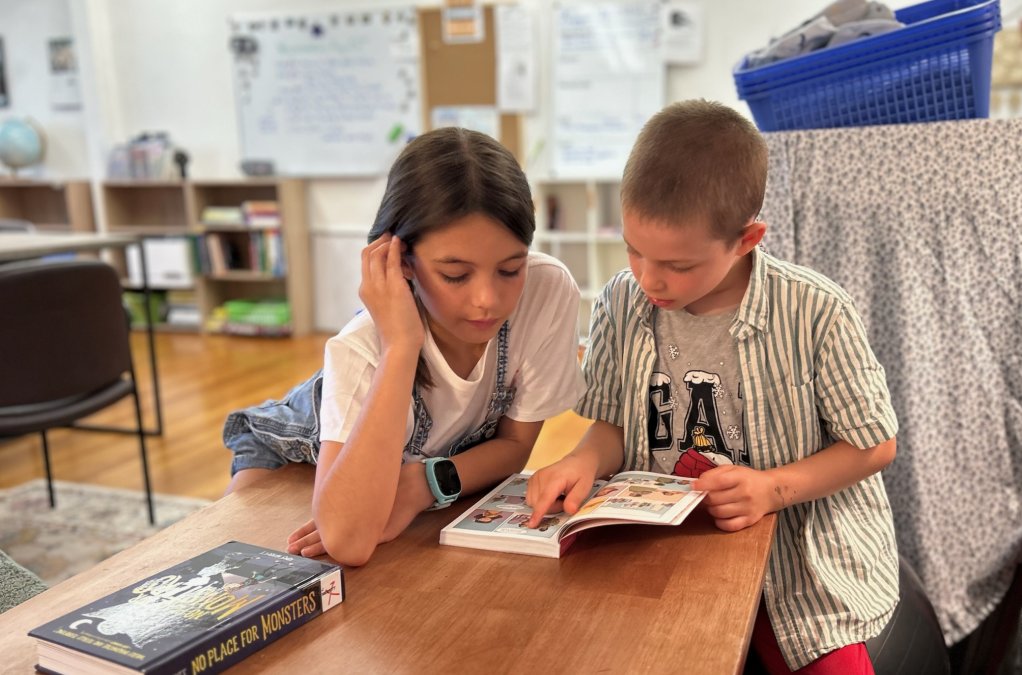
A common mistake is choosing the program with the longest lesson list. In practice, the best SEL programs for elementary students are the ones a tired teacher can still deliver in week nine. Watch out: programs that require every adult in the building to use identical language fall apart when one grade level opts out.
Second Step: The Research-Heavy Foundation
Second Step is the program most schools name first, and the reputation is earned. It offers age-appropriate K-5 lessons on empathy, emotion management, and problem-solving, plus teacher training and support materials.
The drawback is the training. Full implementation asks a lot of teachers, and a school that buys the curriculum without protecting planning time will see it become a binder on a shelf. Where it wins is consistency: every classroom teaches the same skills in the same order. If your staff is stable and your schedule has room, it is a strong core.
Emotional ABCs: Digital Emotional Literacy for Young Learners
Emotional ABCs teaches children to name and manage emotions through interactive digital modules, and it is the easiest entry point on this list for a single teacher.
The catch is the screen. Classrooms without dependable device access will find it hard to run consistently, and the digital format does less of the relationship work that happens face to face. Many families pair it with hands-on practice at home; our Food & Feelings kit was built for exactly that, teaching emotional vocabulary through food, stories, and play.
Positive Action: A Whole-School Culture Shift
Positive Action spans PreK-12.
That breadth is also the burden. This is not a curriculum you hand a teacher; it is a multi-year culture project with many moving parts.
Harmony SEL: Relationship-Building Without the Licensing Fee
What most guides miss is the trade-off behind "free." Harmony offers less customization than paid enterprise programs, so a school with unusual needs will do more adapting on its own. The relationship focus is real, though, and the classroom meeting structure gives teachers a repeatable routine.
Zones of Regulation: A Practical Framework for Self-Regulation
Zones of Regulation is not a curriculum in the same sense as the others. It is a cognitive-behavioral framework that uses a color-coded system to help students identify their emotional state and apply calming strategies. It is widely used in both special education and general classrooms.
The limitation is consistency: the framework only works if every adult uses the same colors and the same responses. A single classroom running it alone gets partial results.
What Makes an SEL Program Effective for Elementary Students
An effective SEL program is one that changes what students do when they are frustrated, not just what they can define on a worksheet. Three conditions separate programs that stick from programs that fade:
- Adults model the skills. Children copy what they see during conflict, not what a lesson says.
- Practice is daily and embedded. Short, frequent routines beat long weekly lessons.
- Families share the language. Skills transfer when home and school use the same words for feelings.
You can see how SEL runs through our learning ecosystem and how it sits inside our curriculum.
What matters most for a child learning to develop empathy in students is repetition with real stakes: repairing a friendship after a hard moment, noticing a classmate who is left out, naming a feeling before it becomes a behavior. Good social-emotional learning activities for elementary students look less like worksheets and more like guided practice in the hallway.
Choosing the best SEL programs for elementary students comes down to honesty about your capacity: how much training your staff can absorb, how consistent your adults can be, and whether families will carry the language home. If you want a partner in that work rather than a binder, Headwaters combines nature- and project-based learning with a Montessori-inspired academic program. Families who want to extend that work at home can turn to our Homeschool Enrichment and Home Learning Resources, which carry the same language and routines beyond the school day. Learn more about Headwaters and what a nature- and project-based learning environment can offer your child.
Frequently Asked Questions
How can schools effectively teach empathy to students?
Effective empathy instruction is explicit and practiced daily, not a one-off lesson. Structured programs can build it through activities such as role-play, perspective-taking discussions, and cooperative games. The key is consistency. When teachers name emotions out loud, model curiosity about others' feelings, and give students language for what they notice, empathy becomes a habit rather than a vocabulary word. Pairing a curriculum with classroom routines that reinforce it matters more than which program you pick.
What should families look for in an elementary SEL program?
Look for four things: evidence of effectiveness, age-appropriate scope and sequence, family engagement materials, and teacher training support. Ask whether the program aligns with CASEL competencies, how much time it takes per week, and whether you can see sample lessons before committing. For homeschooling families, prioritize programs with clear parent guides and printable or digital activities you can run at home without a classroom of peers.
How can teachers help a child calm down when upset?
Start with co-regulation before correction. Get low, lower your voice, and name what you see without judgment. Frameworks like Zones of Regulation give children a shared vocabulary for their internal state, which makes it easier to choose a calming strategy. Offer two acceptable options rather than a demand, and give space once the child is regulated. Teaching calming strategies during calm moments, not crises, is what makes them usable when emotions spike.
Is empathy born or taught?
Both. Children arrive with varying degrees of natural sensitivity to others, but empathy is a skill that develops through modeling, practice, and language. Programs that combine direct teaching with real opportunities to practice, like cooperative projects and conflict resolution routines, can support that growth.
What makes an SEL program effective for elementary students?
Effective programs share several traits: they are sequenced, active, focused, and explicit. They run long enough to build habits, involve teachers who receive real training, and extend into family and school culture. Programs that integrate SEL into the academic day, rather than treating it as an add-on, tend to be more consistent.