 Listicle
Emotional Intelligence Activities for Kids: 9 Ideas for Home
Last Updated: November 11, 2026
Quick Summary
Emotional intelligence activities for kids work best as play, such as emotion charades, feelings journals, and drawing feelings. Calming tools like balloon breathing and five-finger tracing help children settle when upset. Matching each activity to the child's age keeps it engaging.
- Emotion charades: one person acts out a feeling card and others guess it.
- Let younger children go first so they can copy an older sibling's example.
- Balloon breathing for ages 4 to 7 takes under two minutes and needs no materials.
- Track how long a child takes to move from upset to calm over several weeks.
Table of Contents
- Why Emotional Intelligence Activities Work Best as Play
- Emotion Charades and Guessing Games
- Feelings Journals and Drawing Emotions
- Emotional Regulation Activities for Kids
- Empathy Activities for Kids That Build Perspective
- Free Printable Emotional Intelligence Activities for Kids
- Adapting These Activities by Age From 5 to 14
- Booking a Visit to Experience Social-Emotional Learning at HEADWATERS
- Frequently Asked Questions
Why Emotional Intelligence Activities Work Best as Play
Children learn emotional intelligence activities for kids best when the lesson feels like a game. Kids who are asked "how do you feel?" often shrug. Kids who are asked to guess a feeling from a silly face will happily keep going. At HEADWATERS, we have come to see this pattern as central to how children grow emotionally, and it shapes how we think about social-emotional growth at home too.

Play lowers the stakes. A child who is asked to name their own anger may feel judged. A child who is trying to make a sibling guess "frustrated" is practicing the same skill without the pressure. That is why the ideas below lean on games, drawing, and movement.
Emotion Charades and Guessing Games
Emotion charades is the simplest of these emotional intelligence activities for kids and the easiest to start tonight. One person picks a feeling card, acts it out with only their face and body, and everyone else guesses. Keep a short list nearby: happy, worried, proud, bored, embarrassed, surprised.
Once the guessing feels easy, make it harder. Ask the actor to show a feeling and then a second feeling that comes right after it, such as disappointed turning into determined. Kids start noticing that emotions shift, which is a core piece of emotional awareness.
Tip: Let the youngest child go first. Watching an older sibling act out a feeling gives younger kids a model to copy.
Feelings Journals and Drawing Emotions
A feelings journal gives children a private place to name what they noticed during the day. For younger kids, use pictures instead of words: a simple face for each feeling, with a line for a short note. If you want ready-made emotion activities for journaling and drawing, the Food & Feelings program offers a nature-based set designed for early learners in PreK-K. Older kids can write a sentence about what happened and what their body felt like.
Drawing works the same way. Ask a child to draw what worry looks like, or where anger sits in their body. The drawing becomes a conversation starter, and you can ask open questions without making the child explain everything in words.
Emotional Regulation Activities for Kids
Naming a feeling is only half the work. Children also need practical tools for calming down when they are upset, and those tools only help if a child can reach for them under pressure. The approach that tends to work is to teach one or two strategies during calm moments, practice them several times a week, and then offer them during harder moments with a single short prompt.
Three regulation activities that need almost no materials:
Balloon breathing (ages 4 to 7). Give the child a balloon, or an imaginary one. Ask them to breathe in slowly through the nose while the balloon fills, then let it out slowly through the mouth. Five rounds usually takes under two minutes. Materials: none, or one balloon. Works one-on-one, at home, or in a small group.
Five-finger tracing (ages 6 to 10). The child traces the outline of one hand with the index finger of the other, breathing in as they move up each finger and out as they move down. It gives the hands something to do, which helps children who cannot sit still during a breathing exercise. Duration is about one minute.
Shake it out (ages 8 to 14). Stand up and shake the hands, arms, and legs for 20 to 30 seconds, then take three slow breaths. This works well for older kids who find the word "breathing" embarrassing, and it can happen before a transition or a difficult task.
Caregiver script for the moment of upset: "Let's try the balloon together. You don't have to talk, just breathe with me." Keep the request to one sentence. If the child refuses, say "Okay, I'll be right here when you're ready," and step back. Pushing a regulation tool on a child in the middle of a meltdown usually makes it harder to use later.
A simple way to notice progress without formal assessment is to track recovery time. Note roughly how long a child takes to move from upset to calm over several weeks, and count how often the child uses a named strategy without being prompted.
Accessibility note: for children who are nonspeaking, who have sensory sensitivities, or who find breath-focused activities uncomfortable, substitute a physical option such as squeezing a soft object, pressing hands together, or rocking in a chair. The goal is the same, a predictable way to settle the body, so pick the option that the child already enjoys.
Empathy Activities for Kids That Build Perspective
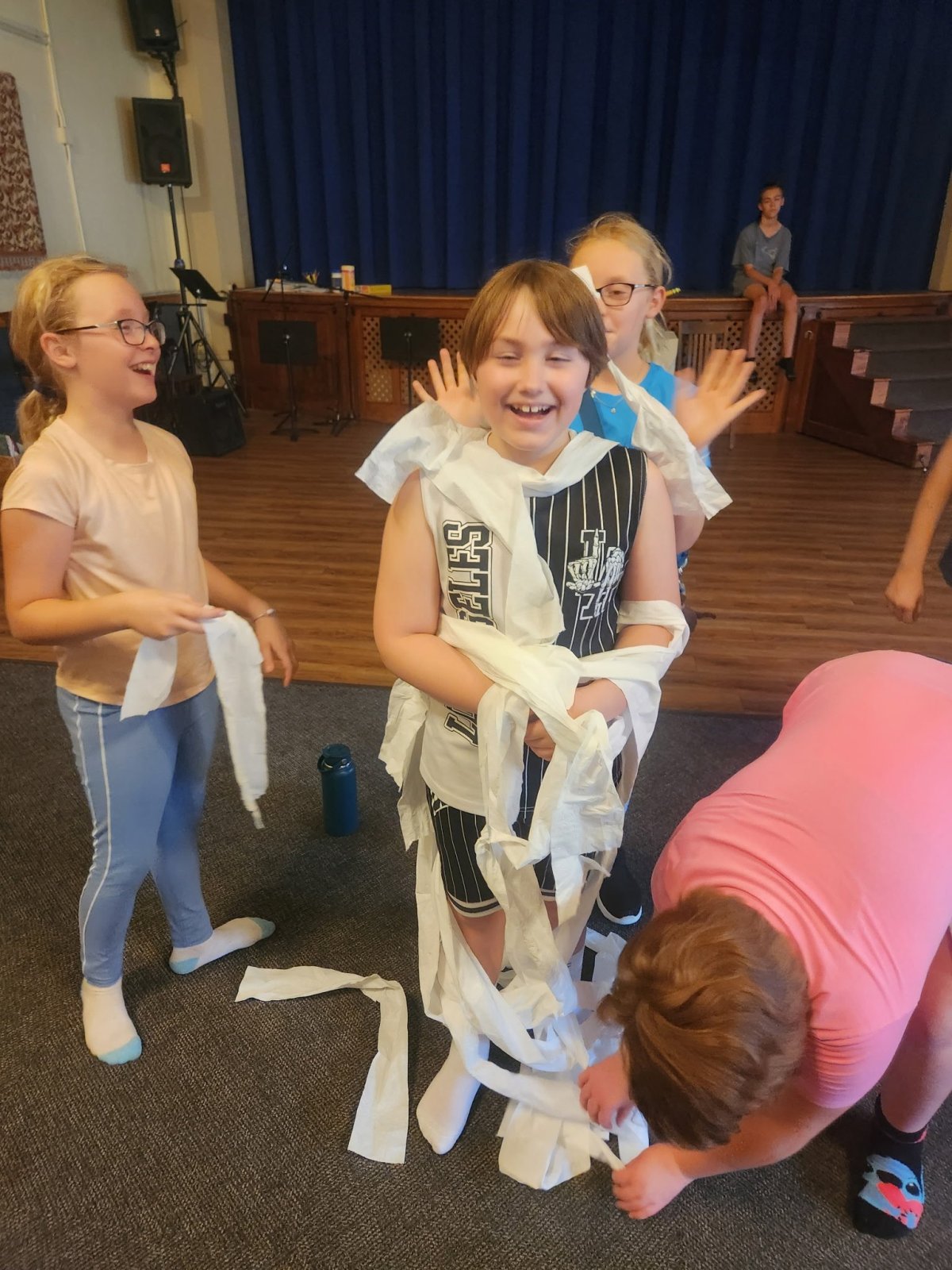
Empathy grows when children practice seeing a situation from someone else's side. Role-play is a strong tool here. Act out a small conflict, such as a friend being left out at recess, then switch roles and ask, "What did that feel like?"
Another option is to pause during a story or show and ask what a character might be feeling and why. Keep the questions specific, and accept more than one answer. Emotional intelligence develops when kids learn that people can feel different things about the same event.
Free Printable Emotional Intelligence Activities for Kids
You do not need to buy a kit to start. Many families print simple face cards, a feelings chart, or a blank journal page and use them over several weeks. Search for printable emotion cards that match the age of your child, and keep the set small enough to use regularly. A set of six to eight feelings is plenty to begin.
If you prefer a structured program, Headwaters offers a Food & Feelings kit that teaches emotional intelligence through food, stories, and play, and a Seedlings Pre-K to K program with ready-made activities for young children.
Adapting These Activities by Age From 5 to 14
The same activity can work at very different levels, so it helps to adjust three things: how much language the activity requires, how long it lasts, and how much the child has to produce on their own.
Ages 5 to 7. Use faces, pictures, and objects instead of written words. Keep charades to three or four feelings and limit each round to about two minutes. Drawing should take five minutes or less, and the adult can do the talking for a while, modeling the words the child will eventually use, such as "I see your mouth turned down. Are you feeling sad?"
Ages 8 to 10. Children can name feelings with more nuance and explain why a character reacted a certain way. Ask for two sentences in a journal or a short explanation of a feeling's cause. Introduce the idea that one event can produce more than one feeling, such as nervous and excited at the same time.
Ages 11 to 14. Discussion about real situations works better than pretend play for many teens. Ask what they would do differently next time, or how a friend might have experienced the same event. Let them lead the conversation, and avoid turning activities into lectures.
Adapting for neurodivergent children and children with disabilities. Many children benefit from predictable structure. Show the steps of an activity on a card before starting, allow a child to stop or take a break without penalty, and offer choices in how to respond (point, draw, act, or say). For a child who is nonspeaking, use picture cards, a communication device, or written prompts so they can answer without speaking. For a child who finds faces overwhelming, use simpler icons or body-posture cards instead of realistic faces. Adults who work with a child's occupational or speech therapist can bring these adaptations into the same activities the child already does.
Adapting for children who use more than one language. Name feelings in the home language first, then in English, or the reverse, and let the child teach you words you may not know. Feelings do not map perfectly across languages, so a word in one language may carry a meaning that has no exact equivalent in the other. Asking "What is the word for this in your family?" is a useful question in itself.
Adapting for family norms. Some families talk openly about feelings, and others express them through actions, humor, or quiet. Neither approach is wrong. If a child's family does not usually name emotions out loud, begin with drawing, music, or play, which can be less direct and still build the same skills.
Local families across Kane County can find many of these approaches in library story hours, park district programs, and community centers, where group activities can be adjusted for different ages in the same room.
Booking a Visit to Experience Social-Emotional Learning at HEADWATERS
Activities at home can build a strong foundation, but many families want to see social-emotional learning in a full community setting. HEADWATERS is a nature-based community farm and academy in Kane County that blends nature- and project-based learning with a Montessori-inspired K-12 academy. Explore the enrichment program to see how it fits your child's week, or start an admissions conversation with our team in Aurora if you are considering our Montessori-informed K-12 school.
Frequently Asked Questions
What are some activities that can help children develop emotional intelligence?
Emotion charades, feelings journals, drawing emotions, role-playing everyday conflicts, and matching situations to feelings all build emotional intelligence in children. Each one asks a child to name a feeling, notice it in others, or reflect on it. Start with two or three activities a week rather than trying all of them at once, and keep sessions short, about 10 to 15 minutes, so the activity stays playful and the child stays engaged.
What are age-appropriate emotional intelligence activities for kids?
Younger children from about 5 to 7 respond well to picture-based emotion cards and simple charades with a handful of basic feelings like happy, sad, angry, and scared. Children from 8 to 11 can handle emotion dictionaries and journaling with short prompts. Early teens benefit from discussing situations from a character's point of view and writing about how their own reactions shifted over a week. Adjust the vocabulary and the length of the activity to match the child's reading level.
How can families practice emotional intelligence activities at home?
Pick one activity for a regular slot, such as after dinner or during a car ride, and keep it consistent for two weeks before switching. Name feelings out loud during everyday moments, like when a sibling gets a turn first. Keep a shared feelings chart on the fridge that anyone can update. Caregivers who model naming their own feelings calmly tend to see children use the same language more quickly.
How can I help a child calm down when upset?
Stay close, lower your voice, and name what you see without judgment, such as 'It looks like you feel really frustrated.' Offer one simple regulation tool, like three slow breaths or squeezing and releasing a fist, rather than several at once. Wait until the child is calm before talking through what happened. Afterward, practice the same calming step during a neutral moment so the child has a familiar option the next time.