 How-to
How to Teach Children to Resolve Conflicts Peacefully
Last Updated: November 2, 2026
Quick Summary
To teach children to resolve conflicts peacefully, start with safety and calm, listen to each child’s experience without assuming anyone’s intent, and guide them toward a repair that actually fits the harm. Peaceful conflict resolution doesn’t always end in friendship or agreement. Sometimes the right outcome is a boundary, a changed arrangement, or time apart.
- Help children settle before you ask them to reason. Sometimes the conversation happens later, or takes more than one try.
- Listen to both children, but don’t assume responsibility is always equal. Patterns, power imbalances, and repeated harm call for adult judgment, not neutrality.
- Use scripts that ask what happened and what a child was trying to do, rather than scripts that assume what they meant.
- Treat the four parts of repair (name it, own it, name the impact, make it right) as a guide, not a ritual. No one should be required to forgive, hug, or accept a repair they don’t want.
- Model repair as adults. Apologies matter, and changed behavior matters more.Table of Contents
- Why Peaceful Conflict Resolution Matters for Kids
- Conflict Resolution Scripts for Kids: What to Say in the Moment
- Helping Children Apologize and Repair Harm
- When to Step In and When to Let Kids Work It Out
- Building a Peaceful Home and Classroom Culture
- Practicing These Skills in a Community Setting
- Frequently Asked Questions
Why Peaceful Conflict Resolution Matters for Kids
Teaching children to resolve conflicts peacefully is the daily work of helping them notice what happened, listen to each other, and figure out what needs to change. At Headwaters, we treat this as part of the curriculum, not an add-on, because in a small community, conflict comes up constantly. Children learn alongside the same people every day. Disagreements don’t just disappear.
That closeness is one of the best things about a small school. It also means that a conflict between two children can ripple through a whole group, involve several adults, and look different depending on who’s describing it.
So here’s what we’ve come to believe from experience: conflict isn’t evidence that a community is failing. What happens next tells you much more.
It also helps to be clear about what “peaceful” means. Peace isn’t the absence of disagreement. A peaceful resolution doesn’t always end with two children becoming friends, agreeing, or even talking right away. Sometimes the right outcome is a clear boundary, a different seating arrangement, an adult stepping in, or simply some time apart. Children can learn to disagree respectfully without being required to like everyone or take part in every relationship.
Children who practice this early get better at it. Many of them grow into people who can listen through a disagreement, take responsibility without collapsing into shame, and come back after a rupture instead of disappearing. That’s what we’re aiming for.
One more thing most guides get wrong: they treat apology as a script. Real repair takes more than words, and we’ll walk through what it involves below.
Conflict Resolution Scripts for Kids: What to Say in the Moment
Conflict resolution scripts for kids are short phrases adults say out loud, so children can borrow the language later. The goal isn’t to end the conflict in thirty seconds. It’s to give children words they’ll eventually use without you.
A few things matter more than the exact words. Keep your voice low. Get on their level. Say less than you want to. And remember that a child who is overwhelmed often can’t process questions yet, so some of these scripts will have to wait.
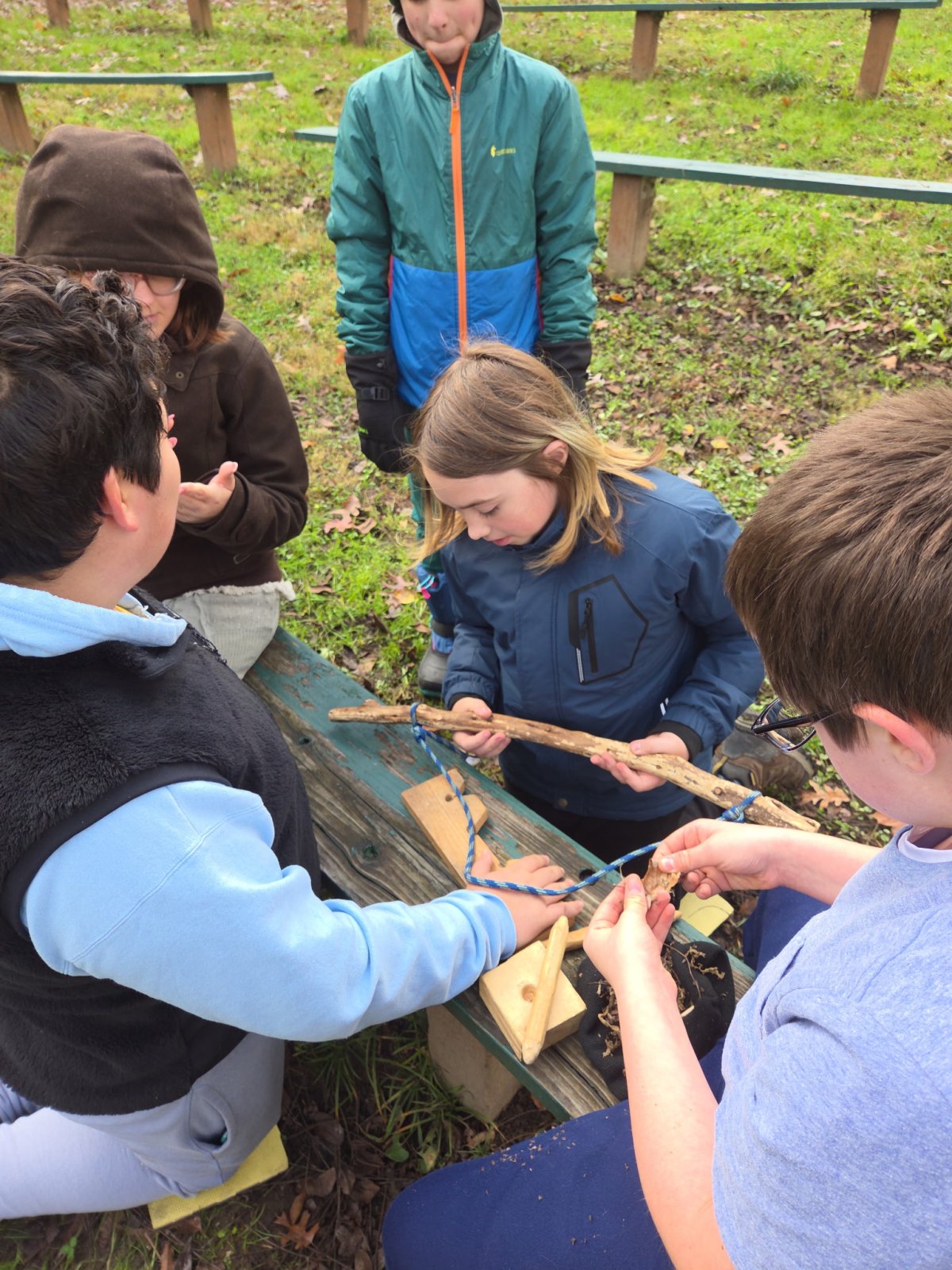
How to Start a Nature School: A 2026 Guide from Founders Who've Done It
Scripts for the Child Who Is Upset
- “I’m here. You’re safe.”
- “Tell me what happened. I’m listening.”
- “That sounds really frustrating.”
- “Do you want some space, or do you want me to stay close?”
- “You can be angry. I won’t let anyone get hurt.”
- “We can talk about it when you’re ready.”
Not every child wants a hug, wants to talk, or feels better after deep breaths. Some need to walk, sit somewhere quieter, or just have an adult nearby without being asked anything. Offering a few choices and watching what helps is usually better than prescribing one solution.
It also matters what you take from an upset child’s account. A child can be completely accurate about feeling excluded, scared, or hurt without knowing why the other child did what they did. Take the experience seriously. Look into the behavior. Try not to declare anyone’s intent before you know it.
Scripts for the Child Who Caused Harm
- “What happened just before that?”
- “Tell me what you were trying to do.”
- “What do you understand about how that affected them?”
- “What do you think needs to happen next?”
Notice what these don’t do. They don’t assume the child meant to hurt someone, and they don’t assume the child didn’t. They don’t ask a child to explain exactly what someone else felt, because they can’t know that for sure. And none of them tries to make a child feel ashamed. Curiosity keeps the door open to learning. Shame tends to close it.
Curiosity isn’t the same as excusing, though. A child can be heard and still be responsible for the impact of what they did.
Conflict Resolution Activities for Children That Build Skills
Conflict resolution activities for children work best when they’re playful and low-stakes. Practicing a skill when nothing is on the line makes it more likely to show up when something is.
Try these at home or in a classroom:
- Role-play the conflict. Act out a disagreement over a toy, then switch roles and try it again.
- Feelings charades. Children guess emotions from faces and body language, which builds noticing, though it’s worth pointing out that people don’t always show feelings the same way.
- The peace table. A dedicated spot where two children can sit and talk something through, when both are ready and both choose to.
- Story prompts. “Two friends both want the same swing. What could happen next?” Ask for several endings, including ones where they don’t end up playing together.
- Cooperative games. Games where the group wins or loses together give children practice working through frustration with each other.
Adapt freely. Some children do better drawing what happened than talking about it. Some need fewer words and more movement. Some need to practice with an adult before trying it with a peer.
Helping Children Apologize and Repair Harm
Helping children apologize and repair harm means going beyond the forced “sorry.” A mumbled apology mostly teaches children to say the words that end the adult’s attention.
Repair also isn’t the opposite of accountability. Restorative approaches aren’t automatically consequence-free. Sometimes safety requires an adult to step in, change who sits where, increase supervision, or set a clear limit. Those responses should be fair and suited to the child’s age, and where possible they should come with a chance to reflect and learn. But not every harm can be resolved with a conversation, and pretending otherwise isn’t fair to the child who was hurt.
Beyond 'Say You're Sorry': The Four Parts of Repair
We teach repair in four steps.
Step | What the Child Does | Example |
|---|---|---|
1. Name it | Says what happened | "I grabbed your truck." |
2. Own it | Takes responsibility | "That was my choice." |
3. Name the impact | Says how it landed | "It made you feel sad." |
4. Make it right | Offers a fix | "Can I help rebuild your tower?" |
A few notes on using it well.
Naming impact isn’t guessing someone’s feelings. It means paying attention to what the other person actually said or showed, and reflecting that back. “You said that made you sad” is more honest than “I made you feel sad,” which assumes the speaker knows another person’s inner experience.
The repair should fit the harm. A drawn picture, a shared turn, or a rebuilt block tower can be just right for a small harm. Bigger harms often call for something different: changed behavior over days or weeks, respecting a boundary, or simply leaving someone alone for a while.
Let the child propose the repair, and let the other child respond. The child who caused harm can suggest how to make it right. The child who was harmed gets a say too.
An apology isn’t a demand for forgiveness. No child should be required to accept an apology, agree to contact, reconcile, or take a repair simply because it was offered. “Thank you for telling me. I’m not ready to play yet” is a completely reasonable answer.
Peer Conflict Resolution for Elementary Students
Peer conflict resolution for elementary students looks different from adult mediation. Children this age need structure, modeling, and a lot of repetition. They also need adults who trust them to try, and who are willing to step back gradually as they show they’re ready.
A common mistake is jumping in too fast. When adults swoop in every time, children miss exactly the moments where the skill grows. The opposite mistake, leaving children to “work it out” when they can’t, is just as real.
Here’s a flexible sequence that works for many children ages six to eleven:
- Settle first. No problem-solving until both children are calm enough. That might take a few minutes, or until tomorrow.
- Each child shares their side, without interruption. Some will talk. Some may prefer to draw it, write it, or tell an adult privately first.
- Check for understanding. Some children can repeat back what the other said, and that can slow down the rush to defend. For others, an adult summarizing both sides works better.
- Think about what could help. Brainstorm a few options together, or let each child think on their own first.
- Decide what happens next. That might be a shared solution, an agreement to play separately for now, or an adult decision when the children can’t get there.
Not every child can or should do face-to-face mediation. Developmental stage, communication style, sensory needs, and the history between two children all matter. Some conflicts are better handled in separate conversations. And no child should be pressured into a handshake, a hug, or an agreement just to close the matter.
When to Step In and When to Let Kids Work It Out
Step in when there’s physical harm, bullying, or a clear imbalance of power. Step back when both children are safe and still working at it. The line is safety and fairness, not adult discomfort.
Here’s our rule of thumb:
- Let them work it out when both children are reasonably calm, no one is being hurt, and the disagreement is about a toy, a turn, or a rule.
- Step in quietly when they’re stuck, by coaching from the side with a question or a script rather than taking over.
- Step in clearly when someone is being hurt, one child has much more power (age, size, or social standing), or the same conflict keeps coming back.
When Conflict Keeps Repeating
A repeated conflict isn’t just a string of unrelated disagreements. If the same children keep clashing, or one child keeps ending up hurt or left out, that’s a pattern, and patterns need adult attention.
That doesn’t mean every conflict is bullying. Most peer conflict is ordinary: two children with competing wants and not yet enough skills to sort it out. But persistent targeting, repeated physical harm, deliberate exclusion, or coercion aren’t disagreements for children to manage alone, and treating them that way leaves the harmed child unprotected.
When a pattern shows up, look at more than the two children. Are the classroom setup, the groupings, the supervision, or the expectations contributing? Sometimes the most effective fix is a changed structure, not another conversation.
Listening Equally Isn’t the Same as Equal Responsibility
Both children deserve to be heard. But listening to both doesn’t mean pretending both contributed equally. When one child has been repeatedly targeted or harmed, false neutrality (“you both need to work on this”) can teach the harmed child that adults won’t protect them. Adults have to use judgment.
It also helps to assume good intent without ignoring patterns. A single hard moment shouldn’t define a child. But repeated behavior can’t simply be explained away by generosity. It calls for clear boundaries, careful documentation, and follow-through.
If you are unsure about your own child, ask. You can reach out to us with questions about your child.
Building a Peaceful Home and Classroom Culture
A peaceful culture is built in small moments, not big lectures. Children learn far more from what adults do than from what they say.
One of the harder things we’ve learned while building Headwaters is that children aren’t the only people who need help navigating conflict. Adults misunderstand one another. We make assumptions. We communicate imperfectly, sometimes at exactly the moment clarity matters most. And sometimes we have to acknowledge that the way we handled something made it harder, not easier.
We’ve had to get better at this. We still are. The children are watching that work, too.
That’s why adult repair matters so much. “I snapped at you earlier. That wasn’t fair. I’m sorry” teaches children that repair is normal, not shameful. But an apology is only the beginning. Often the more important repair is a changed behavior or a better process, so the same thing doesn’t happen again.
As a young school, we’ve been working with a simple sequence for our own mistakes: name what happened, own our part, correct what’s inaccurate, repair the relationship, and learn from it so something actually changes. It’s the same thing we ask of children. It would be strange to expect it of them and not of ourselves.
We’ve also learned that good intentions don’t prevent misunderstandings. Adults need shared expectations and reliable ways to communicate, especially when a child is having a hard time. Problems get harder when adults talk around each other instead of to each other, when people are working from different information, or when a disagreement pulls in people who don’t need to be part of it. We’re still building clearer systems for this, and we’ve seen how much it matters.
Being responsive also has limits, and it’s worth saying plainly. Listening to a family doesn’t always mean agreeing with their view of what happened. Being compassionate doesn’t mean every request can be met. And caring for one child can’t mean setting aside our responsibilities to another.
Families, Schools, and the Children in the Middle
Parents and teachers sometimes see the same situation differently: what happened, what a child needs, or how to respond. That’s normal. What matters is that the adults work it out directly and through the right channels.
Children shouldn’t have to carry messages between home and school, manage their parents’ relationship with their teachers, or become evidence in a disagreement between adults. Families deserve clear communication about their own child’s experience. Other children’s private information, including consequences, should stay private. No child should become a public example of someone else’s wrongdoing, or have adult opinions shape how their classmates see them.
A few habits that help build a peaceful culture at home or in a classroom:
- Name feelings at the dinner table, starting with your own.
- Hold a regular family or class circle to talk about what’s working and what isn’t.
- Notice and appreciate calm problem-solving when it happens.
- Keep consequences predictable, proportionate, and kind.
- Repair your own mistakes out loud, and follow through on what you said you’d change.
You can read more about how this fits into daily life at a small, Montessori-informed, nature-based microschool in Our Headwaters Model.
Practicing These Skills in a Community Setting
Children grow these skills fastest when they use them with other children. A child can practice scripts with a parent, but real peer conflict is where the learning sticks.
That’s one reason our homeschool enrichment program is built around shared, hands-on work with the same group of children week after week. When children know they’ll see each other again next Thursday, working things out matters more.
Here’s something parents often notice: a child who melts down at home may handle a conflict with friends surprisingly well. The skill is there. It sometimes needs a different setting to show up.
Kids need other kids. That isn’t a weakness in the plan. It’s the plan.
If you’re an educator building a program of your own, many of these same questions shape the early design decisions we describe in How to Start a Nature School: A 2026 Guide from Founders Who’ve Done It.
Frequently Asked Questions
How do you teach children to resolve conflicts peacefully?
Start by staying calm yourself and making sure everyone is safe. Help children settle before asking them to talk, which might take minutes or might mean coming back to it later. Then listen to each child’s side, take their experiences seriously without assuming anyone’s intent, and guide them toward a repair that fits what happened. Practice the language during calm moments, through role-play and stories, so it’s familiar when a real disagreement comes up.
What are the steps of conflict resolution for kids?
A simple sequence works for many children: 1) Settle and cool down. 2) Each person shares their side without interruption. 3) Each person says what they need, and adults help check for understanding. 4) Decide what happens next, whether that’s a shared solution, a repair, a boundary, or time apart. Writing the steps on a card where children can see it helps them use the steps more independently over time.
When should an adult step in to resolve a conflict between children?
Step in right away if there’s physical harm, bullying, or a power imbalance that leaves one child unsafe. Also step in when the same conflict keeps repeating, since patterns need adult attention. Otherwise, if both children are safe and engaged, give them a chance to try their own words first. When you do step in, act as a coach rather than a judge, while still using your judgment about who is responsible for what.
How do you help a child apologize and make things right?
Move beyond a forced “sorry.” Help the child name what they did, take responsibility for it, reflect what the other person communicated about the impact, and choose a repair that fits, like rebuilding a block tower, writing a note, giving a turn, or changing their behavior going forward. The child who was harmed doesn’t have to accept the apology or forgive right away. Adults can model all of this by apologizing sincerely when they get something wrong, and then doing something differently.
Peaceful conflict resolution is not a lesson you teach once. It is a culture you build, day after day, with language, patience, and repair. If you are looking for a community that takes this as seriously as you do, we would love to talk. At HEADWATERS, we teach social-emotional regulation and communication explicitly, in a small, nature-based setting where every child is known. Learn more about how we do it, and get started with HEADWATERS to give your child a community where these skills grow.