 blog
Microschool vs Traditional Private School: Which Fits?
Last Updated: October 28, 2026
Quick Summary
The microschool vs traditional private school choice comes down to scale and structure: a microschool is a small, independently run learning community, while a traditional private school is a larger institution. Both teach academics, but microschools offer mixed-age cohorts and flexible days, while traditional schools provide broader extracurriculars.
- Microschools typically enroll a few dozen students, while traditional private schools enroll several hundred.
- Microschools often use mixed-age cohorts and low adult-to-student ratios instead of grade-level classrooms.
- Ask each school what happens when a teacher is out for a week before enrolling.
- Set a realistic commute limit first, then narrow schools by teaching philosophy, then visit at least two.
- Visit on a normal day rather than an open house to see a regular morning.
Table of Contents
- Microschool vs Traditional Private School: The Core Differences
- Microschool Pros and Cons for Real Families
- What a Microschool Curriculum Actually Looks Like
- Class Size, Ratios, and Daily Rhythm: A Side-by-Side
- Microschool Parent Questions You Should Ask Before Enrolling
- How to Find a Local Microschool in Aurora
- Visit Headwaters and See a Microschool Day for Yourself
- Frequently Asked Questions
Microschool vs Traditional Private School: The Core Differences
The microschool vs traditional private school question usually starts with class size. It ends somewhere much bigger: how a child spends their day, who knows them well, and what "school" is actually for. At HEADWATERS, a Montessori-informed, land-based microschool in Kane County, Illinois, we answer this question from parents comparing options across Aurora and the Fox Valley.
Here is the short version. A microschool is a small, independently run learning community. A traditional private school is a larger institution. Both teach academics. The difference sits in scale and structure.
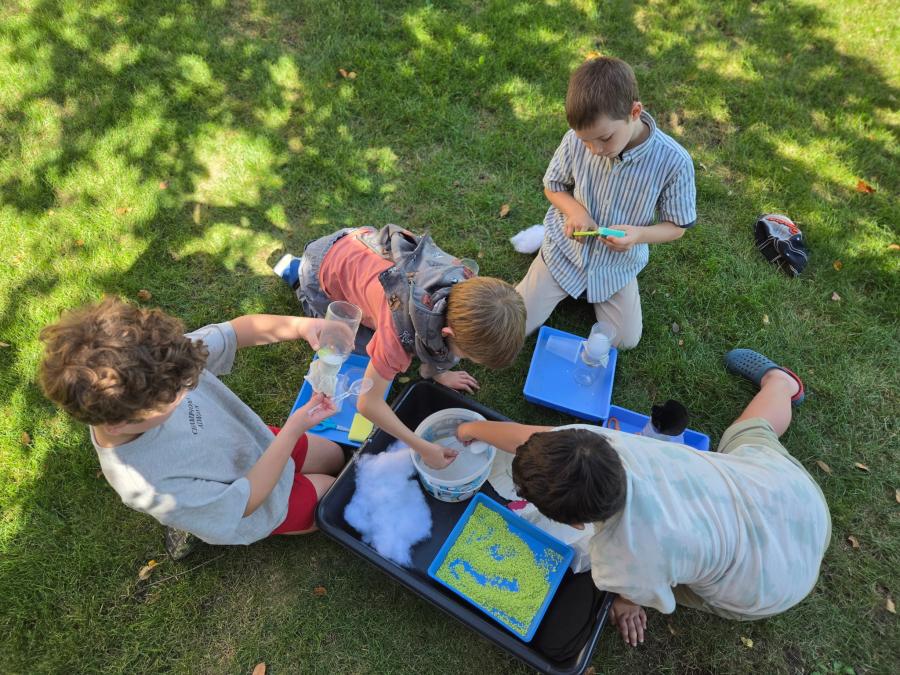
How Each Model Defines 'School'
Traditional private schools can take different forms.
Microschools can take different forms.
Families may consider which school model fits their needs.
Microschool Pros and Cons for Real Families
Parents may ask whether a microschool is a good fit for their child. The answer depends on the child and the school.
Where Microschools Shine
- Real-world learning. Projects, outdoor time, and hands-on work replace worksheets.
Where Traditional Private Schools Still Win
Watch out: the biggest mistake families make is choosing a microschool for the philosophy alone. Ask what happens on a hard day. Small schools have less slack when a teacher is out or a child needs extra support.
What a Microschool Curriculum Actually Looks Like
A microschool curriculum can take different forms.
At HEADWATERS, our K-8 curriculum pairs Montessori-inspired learning with land-based learning.
The academic rigor question is fair, and families should ask it directly.
Class Size, Ratios, and Daily Rhythm: A Side-by-Side
Daily rhythm can differ between schools.
| Feature | Microschool | Traditional Private School |
|---|---|---|
| Typical enrollment | A few dozen students | Several hundred students |
| Class grouping | Mixed-age cohorts | Grade-level classrooms |
| Adult-to-student ratio | Low, often one adult per small group | Varies, often one teacher per class |
| Daily structure | Blended blocks, more flexible | Fixed periods and schedules |
| Setting | Often land-based or community spaces | Dedicated campus |
| Parent involvement | High, community-oriented | Structured through events and committees |
| Extracurricular breadth | Limited | Broad |
Confirm a school's actual ratios during a visit.
Microschool Parent Questions You Should Ask Before Enrolling
Ask about academics, staffing, and costs before making a decision.
- What does a full week of academics look like?
- How do you track progress, and how will I see it?
- What happens when my child struggles or needs extra challenge?
- Who teaches, and what are their qualifications?
- How do you handle conflict and harm repair between students?
- What is the plan if a teacher is out for a week?
- How stable is enrollment and leadership?
- What does tuition cover, and what costs extra?
On cost, we will not guess what other schools charge. You can review our tuition and fees to see what enrollment at Headwaters involves. Ask each school for a full fee schedule, then compare what is included.
How to Find a Local Microschool in Aurora
Finding a local microschool in Aurora starts with three filters: location, philosophy, and fit. Search within a realistic commute, then narrow by teaching approach, then visit at least two schools before deciding.
-
Set a commute limit first. A long drive wears thin by November.
-
Ask about the philosophy in plain terms. Montessori-informed, nature-based, and classical mean different things.
-
Visit on a normal day. Skip the open house and watch a regular morning.
-
Check the transition plan. Moving from a larger school takes support. Our guide to moving to a microschool walks through emotional readiness, enrollment, and a smooth start.
Families who are still weighing a part-time or hybrid approach can also explore our Homeschool Enrichment program and the Home Learning Resources we share for learning at home.
Visit Headwaters and See a Microschool Day for Yourself
Reading about a model only goes so far. You can start the admissions conversation and arrange a visit to see a microschool day for yourself.
At HEADWATERS, we are a nonprofit community farm and academy, and we are honest about being new at running a school. Our teachers bring deep experience and master's-level training, and our students are genuinely attached to them. We care about building community, repairing harm when it happens, and getting this right.
Frequently Asked Questions
What is the difference between a microschool and a traditional private school?
A microschool is a small learning environment. A traditional private school can take different forms. Families can consider which model fits their needs.
Are microschools considered private schools?
Families should confirm a specific microschool's legal status and requirements directly.
What should parents ask when visiting a microschool in Aurora, Illinois?
Ask about the school's academic approach, what a typical day looks like, teacher credentials, and how the school handles conflict between students.
How do microschools handle academics and student progress?
Microschool approaches to academics and student progress can vary. Families can ask how a school measures growth and shares progress with parents.
Choosing between a microschool and a traditional private school is a fit question, not a ranking question. If you want a small, land-based community where your child is known well, we would love to show you what that looks like in Aurora. Get started with HEADWATERS and see a school day up close, with our Montessori-informed K-8 curriculum, our farm-based learning, and a team that knows every student by name.