 Comparison
Microschool vs Charter School in Illinois: Key Differences
Last Updated: November 10, 2026
Quick Summary
The microschool vs charter school in Illinois difference is structural: charter schools are public schools funded by taxpayers, while microschools are small independent learning environments, usually private and tuition-supported. That one difference shapes class size, curriculum control, cost, and who is accountable.
- Charter schools are tuition-free public schools; microschools are usually private and tuition-supported.
- Illinois charters operate under a charter contract with an authorizer and face state-mandated testing.
- Microschools often use multi-age classrooms and flexible, child-led curriculum.
- Charters admit students by lottery when demand exceeds seats.
- Ask any microschool how it tracks academic progress in plain language.
Table of Contents
- Microschool vs Charter School in Illinois: The Core Difference
- Side-by-Side Comparison: Funding, Class Size, and Curriculum
- How to Start a Microschool in Illinois
- Microschool Curriculum Examples and the Benefits of Project-Based Learning
- Illinois Regulations and Accountability: What Parents Should Know
- Cost Comparison and Special Education Support for Aurora Families
- Pros and Cons of Each Model for Kane County Parents
- Finding the Right Fit in Aurora: Next Steps for Your Family
- Frequently Asked Questions
Microschool vs Charter School in Illinois: The Core Difference
The microschool vs charter school in Illinois question comes down to a single structural fact: charter schools are public schools funded by taxpayers, while microschools are small independent learning environments, usually private and tuition-supported. That one difference shapes everything else, from class size to curriculum control to who is accountable when something goes wrong.
At Headwaters, a Montessori-inspired, nature-based school in Kane County, we welcome questions like this from local families. Below, we break down funding, class size, regulation, cost, and special education support so you can compare the options.
What Defines a Microschool
A microschool is a small, independent learning environment, typically serving a tight group of students with mixed ages and a high degree of curriculum flexibility. Most microschools operate as private entities, which means tuition, not public funding, keeps the lights on.
The model borrows from homeschool practice, learning pods, and boutique education. Multi-age classrooms, individualized attention, and child-led learning are common. So is parental involvement: families usually choose a microschool deliberately, not by district assignment.
How Illinois Charter Schools Work
Charter schools in Illinois are public schools operated under a charter contract with an authorizing body, often a school district or a state commission. They are tuition-free, open to students by lottery when demand exceeds seats, and subject to public oversight.
That public funding comes with strings: state-mandated testing, compliance reporting, and accountability for academic outcomes. A charter school can set its own instructional model and curriculum within the charter, but it cannot operate as a private school experience. It is still a public school.
Side-by-Side Comparison: Funding, Class Size, and Curriculum
Charter schools win on cost and public accountability; microschools win on individualized attention and curriculum flexibility. That is the trade in one sentence.
Feature | Microschool | Illinois Charter School |
|---|---|---|
Funding | Private tuition, fees | Public funding, tuition-free |
Oversight | Private, self-governed | Public oversight, charter contract |
Class size | Small-group, often multi-age | Varies; typically larger |
Curriculum | Flexible, child-led possible | Set by charter, state standards apply |
Testing | Varies by school | State-mandated testing |
Admissions | School's own process | Lottery, open enrollment |
Best for | Families wanting autonomy and small setting | Families wanting public funding and structure |
How to Start a Microschool in Illinois
Starting a microschool in Illinois starts with a legal decision: operate as a private school, a homeschool cooperative, or a learning pod. Each path carries different requirements, and the right one depends on your size, funding model, and how formal you want the structure to be.
Here is how we would map it out:
- Define your model. Full-time private school, part-time enrichment, or homeschool support. The answer changes your compliance obligations.
- Check Illinois requirements. Private schools in Illinois have registration and health, safety, and attendance obligations. Confirm current rules with the Illinois State Board of Education.
- Understand homeschool law. If you operate as a homeschool co-op, review Illinois homeschool laws carefully before enrolling families.
- Set your funding model. Tuition, sliding scale, or nonprofit status. This drives everything from staffing to facilities.
- Build the learning environment. Space, materials, outdoor access, and a clear instructional model.
- Plan for harm repair and community. Decide up front how you handle conflict, discipline, and parent communication.
Families weighing a move, rather than a launch, will find practical steps in our guide to transitioning to a microschool.
Microschool Curriculum Examples and the Benefits of Project-Based Learning
Microschool curriculum examples range from Montessori-inspired mixed-age classrooms to outdoor, place-based programs built around real work. The benefits of project-based learning show up most clearly when students stay with a question long enough to see it through.
A typical microschool might run a food-systems project across a full season: planting, measuring, record-keeping, budgeting, and presenting results. Reading, math, and science live inside the project rather than beside it. That is personalized learning in practice, not a buzzword.
What Project-Based Learning Looks Like Day to Day
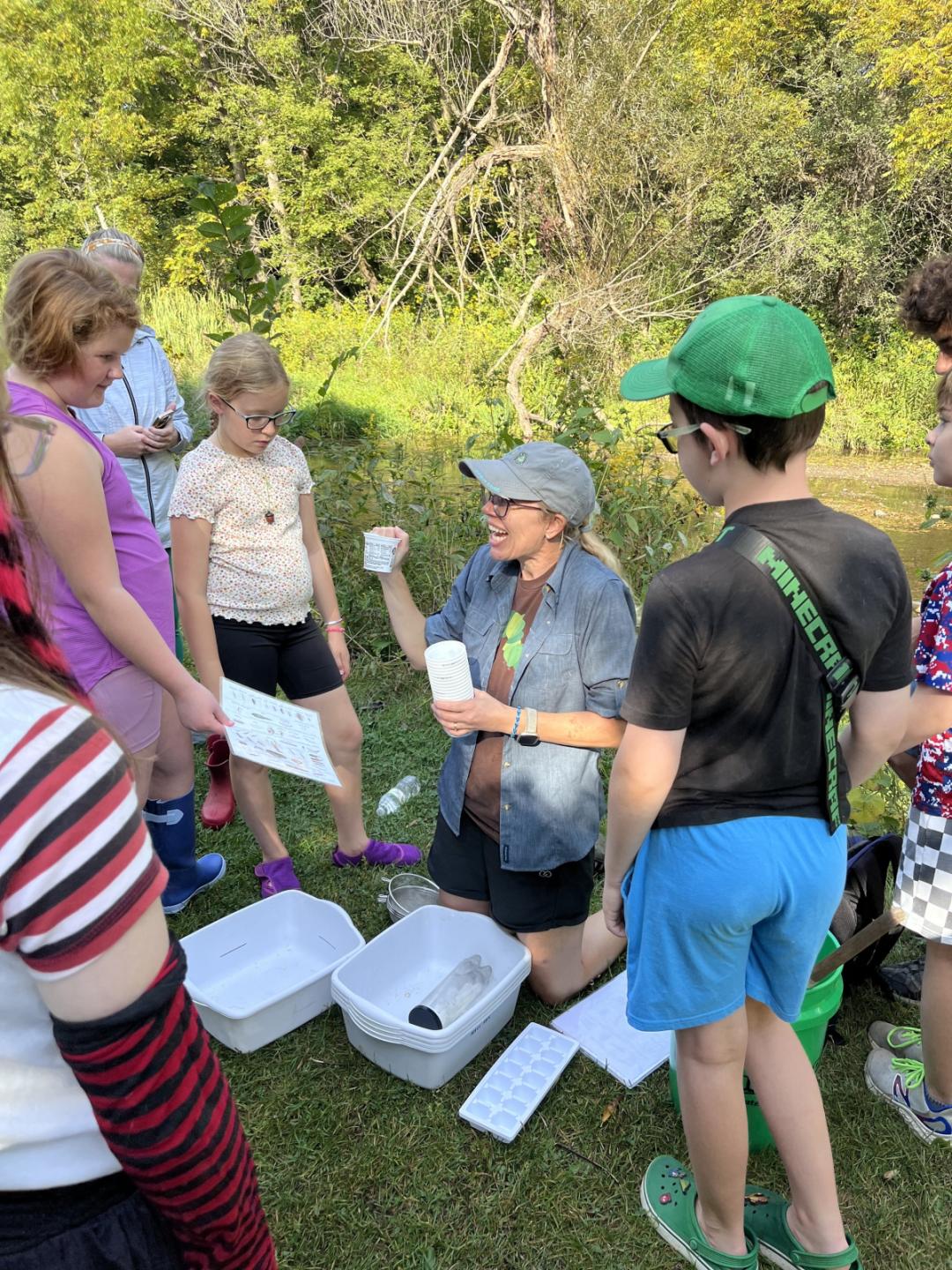
A day might start with a group meeting, move into a focused academic block, then shift outdoors for hands-on work tied to the current project. Small-group instruction fills the gaps for students who need more support in reading or math.
For a deeper look at the research and why place matters, read our breakdown of outdoor project-based learning.
Illinois Regulations and Accountability: What Parents Should Know
Accountability is where the two models diverge most sharply in Illinois, and it is the part most national comparison articles gloss over. Here is the Illinois-specific picture.
How Illinois Charters Are Authorized and Overseen
In Illinois, a charter school operates under a charter contract granted by an authorizing body. Depending on the school, that authorizer is typically a local school district, and in some cases a state-level commission.
Oversight is layered. The authorizer monitors performance against the charter, and the Illinois State Board of Education sets the statewide framework, including assessment and reporting expectations that apply to public schools. Charters are public schools, so they participate in state-mandated testing and public reporting.
How Illinois Microschools Are Regulated
Microschools sit in a different legal world. Most operate as private schools, and Illinois private schools have their own set of obligations, registration and health, safety, and attendance requirements, but they are not part of the public accountability chain.
Some microschools instead structure themselves as homeschool cooperatives or learning pods, which pulls them under Illinois homeschool law rather than private-school rules. The compliance path depends entirely on how the school is set up, which is why the legal structure decision comes first.
What This Means for Parents Doing Due Diligence
The accountability difference is not a loophole; it is a different kind of trust. With a charter, the state and the authorizer are doing part of the checking for you. With a microschool, that weight shifts to you.
Ask a microschool how it tracks academic progress, how it documents learning, how it handles socialization, and what happens when a student struggles.
Watch out: a microschool that cannot describe its progress-tracking method in plain language is a warning sign, no matter how warm the tour felt.
Cost Comparison and Special Education Support for Aurora Families
Two questions come up more than any others from Aurora families: what will this actually cost, and what happens if my child has an IEP or a 504 plan. Most comparison articles skip both. Here is the honest version.
The Cost Picture
Charter schools are public schools, so they are tuition-free. That is the whole cost story on paper, and it is a real advantage for many families.
Microschools are usually private and tuition-supported, so families carry the cost. Cost structures vary widely by school: some are straightforward tuition, some use sliding scales, and some operate as nonprofits.
For Aurora families comparing options, you can request current pricing and enrollment details directly from Headwaters.
Special Education: The Sharper Difference
This is where the two models part ways in a way that matters for families with an IEP or 504 plan.
Charter schools are public schools, so they are subject to special education obligations.
Microschools are private, and their obligations under special education rules differ from those of public schools. Ask each school what support it can offer.
Ask directly what support a school can offer, what it cannot, and how it would coordinate with outside providers or the district.
Questions to Ask Either School
- How is the school funded, and what does a year actually cost my family?
- If my child has an IEP or 504, who delivers the services, and how are they documented?
- How does the school track progress, and how will I see it?
- What happens when a student needs more support than the setting provides?
Those four questions will tell you more than any comparison table.
Pros and Cons of Each Model for Kane County Parents
Neither model is universally better. The honest answer depends on what your child needs and what your family can commit.
Charter school pros: tuition-free, public oversight, structured accountability, and broader accessibility. Charter school cons: lottery admissions, larger classes in many cases, state-mandated testing, and less curriculum autonomy.
For Kane County families, the practical tiebreaker is usually commute and fit. A school 45 minutes away can still be the right choice, but only if the program earns it.
Finding the Right Fit in Aurora: Next Steps for Your Family
Start by writing down what your child actually needs: class size, outdoor time, academic support, social fit, and budget. Then visit. A tour tells you more about a learning environment than any comparison table.
If you want to see how a small, structured model works in practice, explore the Headwaters model. Families who are still weighing a part-time or hybrid path can also look at our Homeschool Enrichment offerings and Home Learning Resources as a way to bridge the gap while deciding. When you are ready to talk, our K-12 admissions in Aurora, IL page explains the process and how to start a conversation with our team.
Comparing microschool vs charter school in Illinois is really a question about what you want your child's days to feel like. At Headwaters, we built a Montessori-inspired, nature-based school where small groups, outdoor project work, and explicit social-emotional teaching sit alongside academics.
Frequently Asked Questions
Is a microschool considered a charter school in Illinois?
No. In Illinois, a charter school is a public school authorized by a school district or the state board, and it receives public funding while following an approved charter contract. A microschool is a small, independent learning environment that operates outside the charter system, usually as a private program or through homeschooling arrangements. The two models have different funding sources, oversight requirements, and legal structures, so a microschool cannot simply call itself a charter school.
Do microschools in Illinois receive public funding?
Generally, no. Microschools in Illinois operate as private programs or through homeschool structures, which means they do not receive the per-pupil public funding that charter schools do. Families typically pay tuition or fees directly. Charter schools, by contrast, are funded with public dollars and cannot charge tuition. This is one of the clearest financial differences between the two models, and it affects how each school plans its budget and sets its class sizes.
How does the curriculum in a project-based microschool differ from a state-authorized charter?
A state-authorized charter school must follow the curriculum and accountability terms written into its charter contract, which usually includes state-mandated testing and specific academic benchmarks. A project-based microschool has more curriculum flexibility and can build its days around child-led learning, small-group instruction, and hands-on projects. That autonomy lets a microschool respond quickly to student interests, but it also means families should ask how the school tracks academic progress without the same formal oversight.
What are the pros and cons of charter schools for families in Aurora, IL?
Charter schools in Aurora and across Illinois offer tuition-free enrollment, public oversight, and access to state-mandated testing that gives families a familiar benchmark for academic outcomes. The tradeoffs include enrollment lotteries, larger class sizes than a microschool typically offers, and curriculum shaped by charter contract requirements. Families who want a private school experience with a small student-to-teacher ratio may find a charter school does not provide that, even though it costs less than most private alternatives.
Is microschool the same as homeschool?
Not exactly. Homeschooling is a parent-directed education model, while a microschool is a small organized program where a teacher or guide leads a group of students, often in a home, farm, or community space. Some microschools operate under homeschool laws, and some families use a microschool as part of a hybrid learning schedule. The key difference is who leads instruction: in a microschool, a dedicated educator usually runs the learning environment, while homeschool parents take on that role themselves.