 Listicle
Farm to Table Activities for Elementary Students That Work
Last Updated: November 12, 2026
Quick Summary
Farm to table activities for elementary students work when they turn food into something children can dig, wash, and taste. Match hands-on tasks to grade level: a five-senses produce exploration for K-2, planting seedlings for grades 2-3, and a full seed-to-snack cycle for grades 4-5.
- The K-2 five-senses produce exploration takes 20-25 minutes with whole fruits and vegetables.
- Grades 2-3 plant bean or pea seeds and record growth weekly.
- Grades 4-5 trace the full food cycle across three sessions, ending with a shared snack.
- In Illinois, plant peas and greens in early April and transplant tomatoes around mid-May.
- Collect allergy information before any tasting activity and always offer a no-taste alternative.
Table of Contents
- Why Farm to Table Learning Belongs in Elementary Classrooms
- Farm-to-Table Lesson Plans That Fit Your Grade Level
- DIY Farm-to-Table Activities for Elementary Students
- Seed-to-Table Activities for Kids Across the Illinois Growing Season
- Farm-to-Table Activities for Elementary Students at Home
- Allergies, Accessibility, and Food Safety in Farm to Table Lessons
- Planning an Aurora, Illinois Farm Visit for Your Class
- Bringing Farm to Table Learning to Your Family
- Frequently Asked Questions
Why Farm to Table Learning Belongs in Elementary Classrooms
Farm to table activities for elementary students work because they turn an abstract idea, food comes from somewhere, into something a child can dig, wash, and taste.
A farm to table lesson is more than a cooking demo or a coloring page about carrots.
When a second grader pulls a radish from the ground, washes it, and eats it, several things happen at once. She learns plant science, practices a practical life skill, and builds a sensory memory that no worksheet can produce.
Below, we break down grade-level lesson plans, do-it-yourself activities, seasonal timing for Illinois, food safety, and where to take a class near Aurora.
Farm-to-Table Lesson Plans That Fit Your Grade Level
Any farm-to-table lesson plan should be built around one question: what can this age group actually do with their hands? Match the task to the developmental stage, and the lesson runs itself. Below are three ready-to-run plans, one for each grade band, with materials, timing, and simple ways to check for understanding.
Grades K-2: The Five-Senses Produce Exploration (20-25 minutes)
Materials: three or four whole vegetables or fruits (a tomato, a carrot, a bell pepper, and an apple work well), paper plates, crayons, a simple chart with columns for look, smell, touch, and taste.
Preparation: wash and dry the produce, cut small taste samples for each child, and check allergy information before the lesson.
Instructions:
- Show one item at a time. Ask children to describe what they see, then what they smell, then what it feels like.
- Give each child a small taste sample and ask them to describe the taste.
- Have children draw or write one word in each column of the chart.
Learning objective: Students will use descriptive language and sensory observation to compare foods.
Check for understanding: Ask each child to name one thing they noticed that they had not expected.
Grades 2-3: Planting and Transplanting Seedlings (30-40 minutes)
Materials: seedling trays or small pots, potting soil, bean or pea seeds, watering cans, labels, and a sunny windowsill or garden bed.
Preparation: pre-moisten the soil, set out one tray per pair of students, and have a sample seedling ready to demonstrate.
Instructions:
- Demonstrate how deep to plant each seed and how to cover it.
- Have pairs fill their tray, plant two or three seeds, label the tray with the date, and water gently.
- Set a weekly observation routine where students measure and record growth.
Learning objective: Students will understand what a seed needs to grow and practice responsible care of a living thing.
Check for understanding: Ask students to explain why the seed needs soil, water, and light.
Grades 4-5: The Full Seed-to-Snack Cycle (three sessions across several weeks)
Materials: a raised bed or large container, seeds or transplants, trowels, watering cans, harvest baskets, a washing station, and simple snack ingredients (for example, lettuce and a safe dressing).
Preparation: assign teams to planning, planting, watering, and harvesting roles, and map out the weeks between planting and harvest.
Instructions:
- Session 1: Teams plan a bed, choose crops, and plant.
- Session 2: Teams observe growth, record data, and troubleshoot pests or watering issues.
- Session 3: Teams harvest, wash, and assemble a simple shared snack.
Learning objective: Students will trace the full food cycle and explain how care, weather, and time affect the harvest.
Check for understanding: Have each team present one thing that went well and one thing they would change next season.
A ready-made resource like the Wisconsin Dairy farm-to-table lesson for grades 2-4 shows what a tight, usable lesson looks like: a one-page teacher's guide plus reproducible student activities. That format works because a teacher can run it tomorrow.
If you want a deeper rationale to bring to your principal or curriculum committee, our own guide on why outdoor learning improves test scores lays out the research case, and our piece on outdoor project-based learning explains why place matters for engagement.
DIY Farm-to-Table Activities for Elementary Students
The best DIY farm-to-table activities for elementary students need three things: a real plant or food item, a job for every pair of hands, and a snack at the end. Here are five that work with minimal materials.
- Seed sorting and soaking. Give each table a packet of bean seeds. Students sort by size, then soak half overnight and compare the sprouted seeds the next morning.
- Garden color hunt. Send pairs into the garden or a produce box to find one item of each color, then classify what they found.
- Wash-and-prep station. Set up a shallow tub, brushes, and towels. Every child washes and dries one vegetable.
- Five-senses taste test. Compare two varieties of the same vegetable, raw and cooked, and chart the differences.
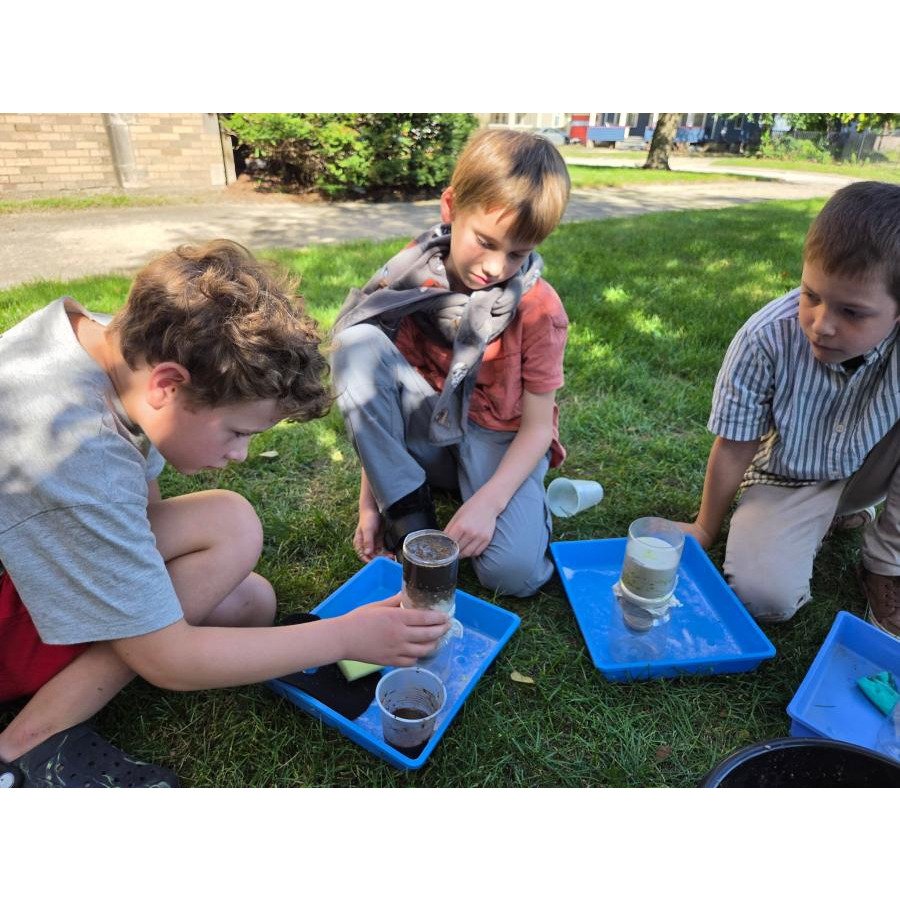
- Compost jar observation. Layer food scraps and soil in a clear jar and watch it change over several weeks.
Washing and Preparing Produce Without the Chaos
Washing produce with a class of eight-year-olds can go one of two ways. The difference is setup, not supervision.
- Assign roles before the water comes out: washer, dryer, quality checker, runner.
- Use shallow tubs, not a running faucet, so no one floods the table.
- Give every child a small brush and a towel, and keep the produce in small batches.
- Set the rule up front: nothing gets tasted until it has been washed and approved by the quality checker.
Watch out: skipping the handwashing step before produce handling is the most common mistake in this activity, and it undermines the whole food-safety lesson. Wash hands first, every time, and the produce station teaches hygiene as a habit rather than a rule.
Seed-to-Table Activities for Kids Across the Illinois Growing Season
Seed-to-table activities for kids should follow the actual Illinois growing season, not a generic calendar.
| Season | What is happening in the garden | Classroom activity | Illinois crops to use |
|---|---|---|---|
| Late winter (Feb-Mar) | Start seeds indoors | Seed-starting in trays, soil study, charting days to germination | Tomatoes, peppers, basil |
| Early spring (Apr) | Cool-season crops go in | Direct-sow peas, lettuce, spinach, radishes; measure soil temperature | Peas, lettuce, spinach, radishes |
| Late spring (May) | Transplant warm-season seedlings | Transplant tomatoes and peppers; set up watering routines | Tomatoes, peppers, beans |
| Summer (Jun-Aug) | Growth and first harvests | Daily observation, pest checks, harvest and weigh produce | Beans, cucumbers, zucchini, herbs |
| Fall (Sep-Oct) | Main harvest and seed saving | Harvest, save seeds, build compost, hold a harvest celebration | Pumpkins, squash, carrots, kale |
A common pattern is to plant peas and greens in early April, transplant tomatoes around mid-May once the soil has warmed, and plan the main harvest for September so it lands after the school year has started.
Wait until the soil is reliably warm to the touch before transplanting tomatoes and peppers.
If you want free local support to keep the learning going through the season, our community farm offers growing and seed-saving help close to home.
Farm-to-Table Activities for Elementary Students at Home
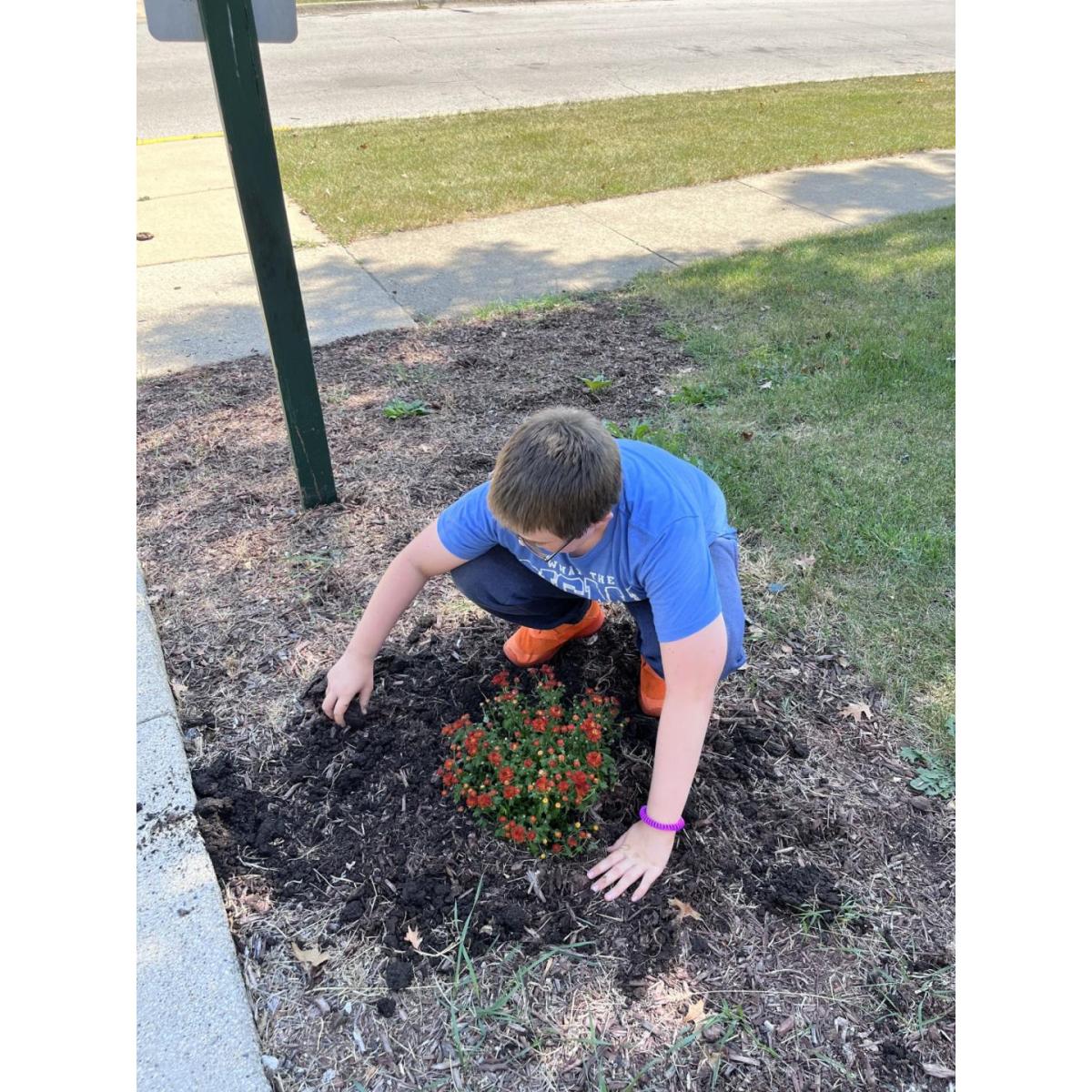
Farm-to-table activities for elementary students at home do not require a garden. A windowsill, a grocery bag, and a kitchen counter are enough to start.
Try a kitchen origin map: lay out five foods and have your child trace each one back to a farm, region, or growing method. Or run a snack assembly line, where kids wash, cut soft items with a butter knife, and plate a snack they built themselves. A windowsill herb pot gives daily watering responsibility and a harvest within weeks.
If you want structure without building it from scratch, our spring seasonal learning pathway is a Montessori-inspired homeschool kit that carries food, stories, and play through the season.
Allergies, Accessibility, and Food Safety in Farm to Table Lessons
Food-based lessons only work if every child can safely take part. Plan for allergies, access needs, and hygiene before the first carrot is washed.
- Collect allergy information before any tasting activity and always offer a no-taste alternative.
- Keep a separate, labeled station for any known allergen, and never require a child to taste anything.
- Offer seated versions of garden tasks for students with mobility needs.
- Provide gloves and brush alternatives for sensory-sensitive children.
- Wash hands before and after handling food, and wash produce with clean running water.
The CDC guidance on handwashing is a practical reference for classroom hygiene routines. Build these steps into the lesson plan itself so safety is part of the learning, not an interruption to it.
Planning an Aurora, Illinois Farm Visit for Your Class
A farm field trip near Aurora works best when the visit is tied to a lesson, not scheduled as a standalone outing.
Before you book, ask three questions: What will each child harvest or touch? How many adults are needed? What happens if it rains? A good host answers all three without hesitation.
For families and schools in Kane County looking for ongoing nature-based learning rather than a single trip, our homeschool enrichment program in Kane County brings gardening, art, theatre, STEM, and hands-on learning together in an eight-week community experience. It is a natural next step after a first farm visit.
Bringing Farm to Table Learning to Your Family
A single garden bed or a single washed carrot can start this.
That is what we are building at HEADWATERS: a place where children learn to grow food, care for soil, and sit at a table together.
We are a new school, and we say so plainly. What we bring is a deeply experienced teaching team, a working farm, and a commitment to getting community and harm repair right. If you want your child's learning rooted in place, start with a conversation.
Ready to see what land-based learning looks like for your family? Get started with HEADWATERS and give your child a school year grounded in soil, seasons, and community.
Frequently Asked Questions
What are some farm to table activities for elementary students?
The most reliable ones follow the full food journey. Students plant seeds in cups or a garden bed, tend and observe them, harvest when ripe, wash and prepare the produce, and assemble a simple snack. Add a sensory comparison of seeds or greens, a compost bin the class maintains, and a visit from a local farmer. Each step gives you a concrete observation to write about, measure, or draw, so the activity carries real science and literacy work rather than just a craft.
How do you explain farm to table to elementary students?
Skip the definition and trace one food backward. Ask where the milk on the lunch tray came from, then walk the chain: dairy cow, farmer, truck, store or kitchen, table. Younger students can sequence pictures of that journey; older students can map it for a vegetable they grew themselves. The concept lands when they have handled part of the chain, which is why growing even one crop makes the explanation stick.
What is a good farm to table activity to do at home?
A windowsill or container garden plus a weekly cooking job works well. Let your child plant lettuce or radish seeds, water them, and harvest leaves for a salad they assemble themselves. Washing produce and tearing greens are jobs most elementary kids can own. Keep a simple chart of planting date, first sprout, and harvest day so the food journey becomes something they can see and measure, not just a story.
How can teachers connect gardening with nutrition lessons?
Have students taste what they grew and describe it before judging it. Comparing a homegrown green to a store-bought one opens a real conversation about ripeness, freshness, and why some foods travel far. Pair that with a simple plate-building exercise using what the class harvested. The farm to table sequence gives nutrition facts a context students remember, because the vegetable in front of them is one they planted and picked.